Common Domestic Accidents in Homes: Causes, Risks, and Prevention
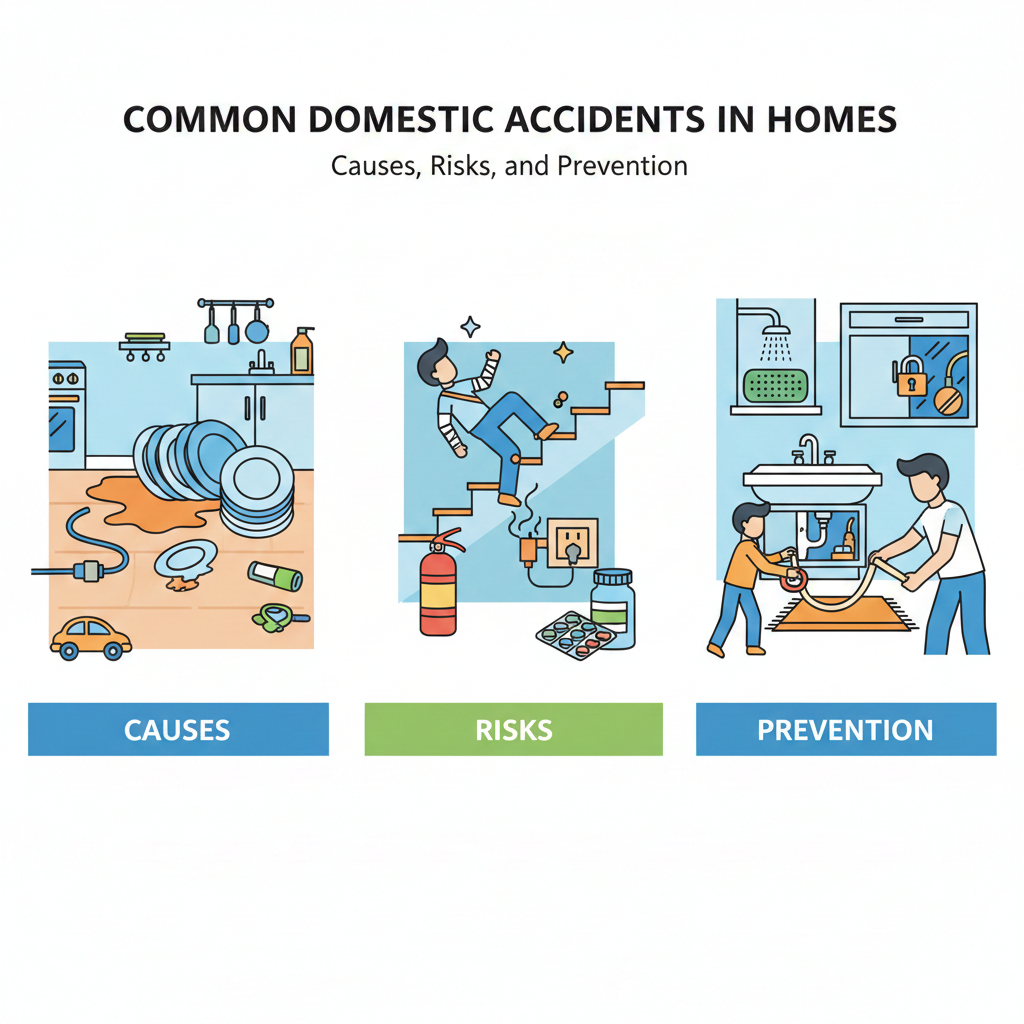
🧠 Quick Summary
Our homes are meant to be places of comfort and safety. However, many serious injuries and even deaths occur inside the home every year due to preventable domestic accidents. From slippery bathroom floors to faulty electrical wiring, everyday household environments contain hidden dangers.
Our homes are meant to be places of comfort and safety. However, many serious injuries and even deaths occur inside the home every year due to preventable domestic accidents. From slippery bathroom floors to faulty electrical wiring, everyday household environments contain hidden dangers.
Understanding the most common domestic accidents is the first step toward creating a safer living space for you and your family.
What Are Domestic Accidents?
Domestic accidents are unplanned incidents that occur within or around the home and result in injury, property damage, or loss of life. They affect people of all ages but are particularly dangerous for children, elderly individuals, and persons living with disabilities.
1. Slips, Trips, and Falls
Slips and falls are the leading cause of home injuries. They often occur on wet floors, staircases, or cluttered walkways.
Common causes include:
Wet bathroom and kitchen floors
Loose rugs and cables
Poor lighting
Broken steps or lack of handrails
Possible consequences: fractures, spinal injuries, head trauma, and long-term disability.
2. Burns and Scalds
Burns are common in kitchens and bathrooms, where hot liquids, flames, and heated appliances are frequently used.
Common sources:
Hot water, oil, and steam
Gas cookers and stoves
Irons and heaters
Electrical faults
Possible consequences: severe skin damage, infections, permanent scars, or death in extreme cases.
3. Electric Shock and Electrocution
Electrical accidents often result from poor wiring systems and careless handling of appliances.
Common causes:
Exposed wires
Overloaded power sockets
Faulty appliances
Using electronics with wet hands
Possible consequences: burns, heart rhythm problems, paralysis, and fatal electrocution.
4. Cuts and Lacerations
Sharp household objects are a frequent cause of injuries, especially in kitchens and storage areas.
Common sources:
Knives and broken glass
Razor blades
Sharp-edged furniture or tools
Possible consequences: deep wounds, blood loss, infections, and nerve damage.
5. Poisoning
Poisoning is one of the most dangerous domestic accidents, especially among children.
Common sources:
Cleaning chemicals and detergents
Pesticides and rat poison
Medications
Gas and carbon monoxide
Possible consequences: organ damage, breathing failure, brain injury, or death.
6. Choking and Suffocation
These accidents often affect infants, young children, and elderly individuals.
Common causes:
Small toys or objects
Hard foods
Plastic bags
Pillows or soft bedding blocking airways
Possible consequences: brain damage, loss of consciousness, and death.
7. Fires and Explosions
House fires are among the most destructive domestic accidents.
Common causes:
Gas leaks
Electrical faults
Unattended cooking
Candles and fuel-powered generators
Possible consequences: severe burns, smoke inhalation, death, and total property loss.
8. Chemical Injuries
Improper use or storage of chemicals can result in serious injuries.
Examples include:
Mixing cleaning agents
Chemical splashes into eyes
Inhaling toxic fumes
Possible consequences: blindness, skin burns, lung damage, and long-term illness.
9. Infections and Animal-Related Injuries
Poor hygiene and untreated wounds can cause infections.
Common causes:
Dirty cuts
Mold exposure
Insect or animal bites
Possible consequences: tetanus, skin infections, allergic reactions, and serious illness.
10. Bathroom-Related Accidents
Bathrooms are high-risk areas due to water, smooth surfaces, and electrical appliances.
Common accidents:
Slipping on wet tiles
Drowning in bathtubs (children)
Electric shock from appliances near water
Who Is Most at Risk?
Children
Elderly individuals
Pregnant women
People living with disabilities
Conclusion
Most domestic accidents are preventable through awareness, proper home design, routine maintenance, and responsible behavior. Installing safety devices, keeping the home organized, supervising children, and maintaining electrical and gas systems can greatly reduce household risks.
A safe home is not only about beauty and comfort—it is about protecting lives.