Current Challenges and Opportunities in the Nigerian Real Estate Sector.
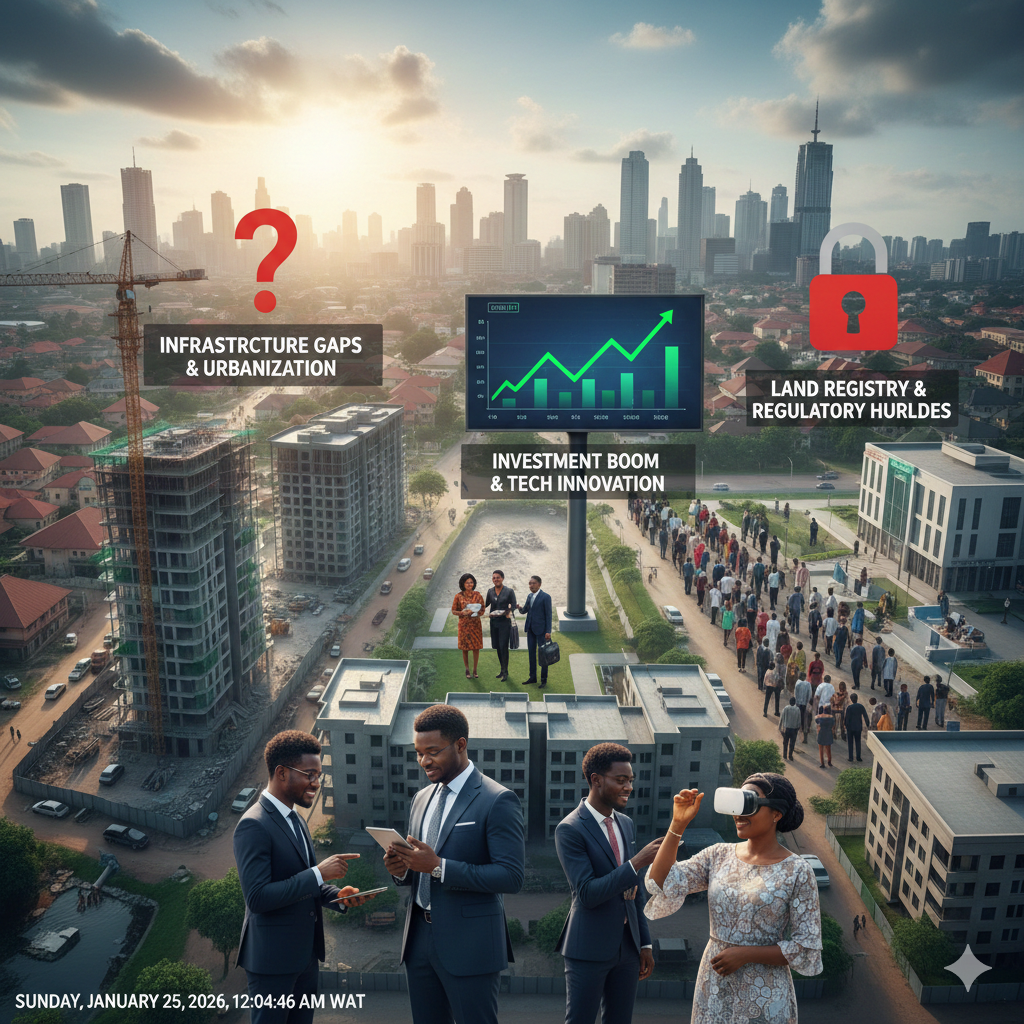
🧠 Quick Summary
The Nigerian real estate sector presents a powerful contrast: significant growth potential driven by undeniable demand, yet held back by deep-seated structural and financial challenges. Success requires navigating this complex landscape strategically. ðŸ˜ï¸ Core Challenges: The Barriers to GrowthThe sector's expansion is constrained by several interconnected issues:1.
The Nigerian real estate sector presents a powerful contrast: significant growth potential driven by undeniable demand, yet held back by deep-seated structural and financial challenges. Success requires navigating this complex landscape strategically.
ðŸ˜ï¸ Core Challenges: The Barriers to Growth
The sector's expansion is constrained by several interconnected issues:
1. Acute Housing Deficit and Financing Crisis
· Housing Gap: An estimated shortfall of 22 to 28 million housing units. To close this, Nigeria needs to build 550,000 new homes annually for the next decade.
· Mortgage Inaccessibility: Mortgage penetration is extremely low at around 1%. High interest rates, often above 18-20%, and stringent requirements put formal home financing out of reach for most.
· High Construction Costs: Reliance on imported materials, inflation, and currency volatility make development expensive, which impacts end-user affordability.
2. Regulatory and Infrastructure Hurdles
· Land and Title Issues: The Land Use Act of 1978 creates bureaucracy. Fraudulent sales, disputes with "Omo Onile" (land grabbers), and difficulties obtaining Certificates of Occupancy are common, increasing risk.
· Inadequate Infrastructure: A lack of reliable roads, electricity, and water in many areas raises development costs and reduces property appeal and value.
· Policy Inconsistency: Overlapping regulations and sudden policy changes create an unpredictable environment for investors.
3. Economic and Security Concerns
· Macroeconomic Volatility: High inflation and foreign exchange fluctuations erode purchasing power and complicate project financing.
· Security Issues: Insecurity in certain regions deters investment and development, affecting property values.
💡 Major Opportunities: Where the Potential Lies
Despite the challenges, powerful demographic and financial trends are creating substantial opportunities.
1. Unmatched Demographic Demand
· Population & Urbanization: With a population exceeding 220 million and rapid urbanization, cities like Lagos (projected to nearly double by 2050) are creating immense, sustained demand for all property types.
· Market Size & Growth: The real estate market is valued at over ₦41.3 trillion and is a top GDP contributor. It's projected to grow at a Compound Annual Growth Rate of 6.87%-7.52%.
2. Evolving Investment and Innovation
· Diaspora Investment: Nigerians abroad are a dominant force, with remittances reaching $20.93 billion in 2024. Much of this is channeled into real estate, providing a crucial source of dollar-denominated funding.
· Alternative Financing: Real Estate Investment Trusts (REITs), crowdfunding, and proptech platforms are emerging, offering new ways to pool capital and streamline transactions.
· Infrastructure Development: The $2.7 trillion National Development Plan (2021-2025) aims to build major projects like the Lagos-Calabar coastal highway, which will open new areas for development.
3. Rising Market Trends
· Affordable Housing: There is critical demand for thoughtfully designed, cost-effective housing solutions.
· Sustainable Building: Growing interest in green technologies, local materials (e.g., bamboo), and energy-efficient designs.
· Flexible Living Models: Strong rental yields (6-12% in prime areas) are driving growth in short-let apartments and co-living spaces.
🧠Strategic Implications for Stakeholders
To capitalize on this market, different players should consider these approaches:
· For Developers & Investors:
· Focus on Affordability & Innovation: Prioritize projects that meet the massive demand for mid-income housing. Adopt cost-saving technologies like modular construction and local materials.
· Leverage Alternative Finance: Structure projects to attract diaspora capital and explore vehicles like REITs for larger developments.
· Partner for Infrastructure: Engage in Public-Private Partnerships or develop estates with integrated infrastructure to enhance value.
· For Policymakers & Associations (like REDAN):
· Advocate for Reform: Push for digitalization of land registries, streamlining of approvals, and policies that stabilize the mortgage market.
· Promote Standards & Sustainability: Encourage green building codes and invest in skills development to improve industry professionalism.
· For Homebuyers & Tenants:
· Conduct Extreme Due Diligence: Always verify land titles with official registries and work only with accredited professionals.
· Explore New Models: Consider co-living or micro-living spaces in major cities as affordable alternatives.
The Nigerian real estate market is not for the faint-hearted, but for those with strategic patience, local knowledge, and innovative approaches, it offers some of the most compelling growth narratives in Africa.